Tuesday, May 24, 2011

Philatelic Fun - Lightly Unhinged


As some of you know, my husband, Peter is a philatelist (among other things). Yeah, I can hear you saying, What the heck is a philatelist? According to Websters, ita specialist in philately. Dont you love dictionaries? The second definition is more clear ¾ “one who collects or studies stamps.”

Peter has loved collecting stamps since he was a boy and has become an avid philatelist in recent years. He’s the Vice President of the Calgary Philatelic Society and a columnist for Canadian Stamp News.

What’s unique about Peter’s columns is that they are humorous. Now, philatelists aren’t known to be punsters or practical jokers, I mean, stamps are serious business. Peter is trying to inject a little fun into the olde philatelly. If you think stamps are boring, read this.

Printed in Canadian Stamp News,
April 26-May 9, 2011
Volume 35 - Number 26

Guest Post ¾ Peter Fleck

It was never my intention to use this column for public advocacy, to stand on a soapbox, or promote some pet cause.

But we’re looking at an injustice that has gone on far too long and a vital initiative whose time has come ¾ and not a moment too soon.

The proper care and protection of stamps has to be of utmost concern to all collectors. It should resonate within our hearts like motherhood and apple pie.

Unfortunately, abuse remains rampant. Innocent and defenseless stamps continue to be victimized with reckless abandon.

I don’t know about you, but I just can’t continue to stand by and let it happen.

Anglo-Irish statesman Sir Edmund Burke (1729-1797) has been traditionally attributed with the quote, “All that is necessary for the triumph of evil is that good men (and women) do nothing.”

Personally, apathy is not something I want written on my epitaph.

But I need your help. Together we have to raise a strong and powerful voice, an organization with “teeth” that can advocate for and actually implement change. What we need is the creation of the Society for the Prevention of Cruelty to Stamps (SPCS).

Much like its cousin, the SPCA, the object is to ultimately spawn an extensive global network of local and national chapters. Yet as Canadians, we can be proud to say that it all started right here.

The agenda of the SPCS will be exhaustive. But for starters, let’s look at some key battlegrounds and perhaps even suggest a few tactics and solutions.


Cancelling The Pen Cancel

That little pen that mail sorters and letter carriers wield can indeed be mightier than the sword. With one fowl swoop, an entire row of stamps on an envelope can be rendered virtually worthless.

Of all people, postal workers should be among the biggest advocates for stamps. After all, these stamps have been created with utmost care and attention by the post office. So to see them desecrated by other members of the Canada Post family is repugnant.

In some countries, it is a crime to treat the flag an unworthy manner. Likewise, the desecration of stamps should be outlawed. I’m not suggesting that offenders be subjected to the kind of extreme punishments that we see exhibited in certain parts of the world, like cutting off a person’s hands. Yet at the very least repeat offenders should be given the pink slip.

Freedom From Bondage

What the pen cancel is to used stamps, the hinge is to mint stamps.

A vigorous campaign of emancipation is required to free stamps from the bondage of hinges. I recognize that throughout history countless stamps have been irreparably marred for life by the use of hinges. But we need to do all that we can to prevent more stamps from falling to this fate.

damage from hinging stamp
To even affix hinges on used stamps is an archaic practice that can leave unsightly hinge remnants and potentially cause permanent damage. There is no real justification for their use in our modern era where plastic stamp mounts are so readily available.

So the only sensible solution is to bring in outright prohibition where the manufacture and sale of hinges is strictly forbidden. Those who violate this statute should be treated no differently than purveyors of other banned substances such as weapons of mass destruction and mind-altering, recreational drugs.

Say No To Acid

Much progress has been made in introducing acid-free papers and plastics for the storage and preservation of stamps. If you think that acid can’t be that bad for stamps, then just pour some into the tub the next time you take a bath. That will change your way of thinking rather quickly.

For stamps, however, the affect of the acid is much more long term. Prolonged exposure to even low acid concentrations will cause gradual discoloration over time. But by the time you notice it, the damage will already be done and it will be impossible to reverse it.

Widespread education is probably the best course of action to keep stamps away from acids, glues, tapes, self-adhesive and waxed photo albums, and other silly and harmful techniques for housing a collection.

The shoreline of Oahu, Hawaii

Environmental Refuges

Hawaii is often referred to as paradise. But for stamps, it can be hell. The warm, humid climate can be like a death sentence to stamps, causing them to stick together and become infested with mold.

Many people in such tropical climates have resigned themselves to only collecting used stamps. Yet even stamps without gum can be susceptible to mildew and foxing.

An example of how "foxing" changes the color of a stamp.


In contrast, the dry, cool climate of Calgary is just about ideal for stamps. So if you live in an area that’s unkind to your stamps and you truly have their best interests in mind, consider sending them to an environmental refuge. I, for one, would be more than happy to provide a friendly, inviting home for your collection. Of course, I’m just thinking of the wellbeing of the stamps when I make this generous offer.

Endangered Species

With the advent of email, epost and other advances in communication, some would argue that the traditional mail system could go the way of the dinosaur. Conversely, the move towards online shopping is putting an increased demand on home delivery.

Yet large-scale commercial mailing operations have long forsaken the postage stamp in favor of metered mail. And so the fear is that the postage stamp may actually be teetering on the verge of extinction.

Perhaps here innovation, or dare I say the evolution of the postage stamp, may be necessary to preserve it’s existence. Canada Post could team up with a company like Pitney Bowes in the production of high-quality, adjustable-rate stamps. In Europe, there’s already been a move towards more attractive, stamp-like postal labels. With the aid of current technology, we could see this advanced to a whole new level.

All About The Stamps

In short, the SPCS will be facing some daunting challenges. But whatever trials lie ahead, the object of the society will be to tirelessly advance the selfless cause of protecting those that cannot protect themselves. It’s really all about the stamps.


Saturday, May 21, 2011

It's The End of the World As We Know It...

...and I feel fine!
If you like REM, listen to Michael Stipe's rant in this classic song here.


"Don't worry about the world coming to an end today. It's already tomorrow in Australia." ~ Charles Schultz.

"If the world comes to an end, I want to be in Cincinnati. Everything comes there ten years later." ~ Mark Twain.

It's after 6 pm on May 21, 2011 in Australia and, more importantly, in Jerusalem. By now the world will realize Harold Camping was wrong. The only people who will be totally surprised by this, will be his devoted followers. It's sad, really, that people can be so easily misled. The 89-year-old leader of the Christian Family Radio Network from Oakland California has predicted the return of Christ in 1994 as well. And, uh, obviously it didn't happen then either...

People have been predicting the return of Christ for 2000 years, ever since Jesus himself told his disciples (and all those who believed in him) He would come back.

In Matthew 24:36 Jesus talks about His own return and says, "No one knows about that day or hour, not even the angles in heaven, nor the Son, but only the Father." And again in Luke 12:40, Jesus tells his disciples, "You must be ready because the Son of Man will come at an hour when you do not expect him."

So according to the Bible, Camping could never be right. As a self-professed Bible-believing Christian, you'd think Camping would know better, but each religion has its lunatic fringe. Unfortunately for Christianity, these fools gain massive publicity and the world begins to equate them with true Christianity, when nothing could be farther from the truth.

Will Graham, the grandson of respected evangelist Billy Graham, said, "Whether you stand before God on May 21st, or whether you stand before him 50 years from now, is irrelevant in the scope of eternity. The important thing isn't WHEN you stand before God; it's WHERE you stand with God."

In 1994, when Camping first predicted the return of Christ sometime between September 5-27, at least then he said he didn't know the exact date, but he has become less Bible-literate since.

Surprisingly, his loyal followers have continued to grow. With 66 radio stations in the USA alone and assets totaling about $160 million, these deep pockets have allowed him to place over 2000 billboards with slogans proclaiming, "Blow the Trumpet! Warn the people!"

Camping said when he made his previous prediction in 1994, "there was a lot of the Bible I had not really researched very carefully." But now, with many years of added study, Camping claims to have developed a system of mathematics that can be used to interpret Bible prophecies.

He proclaimed the return of Christ on May 21 because that will be 722,500 days from April 1 (AD33), which he believes was the day of the Crucifixion. The figure of 722,500 is important because it comes from the multiplication of three holy numbers (five, 10 and 17) together twice.

"When I found this out, I tell you, it blew my mind," Camping said.
Hmmm, I'm sure it did!

Mr Camping's argument has convinced Adam Larsen, 32, from Kansas, as well as scores of "ambassadors" to quit their jobs and drive around America in Family Radio vehicles warning of the impending apocalypse. "My favorite pastime is raccoon hunting," Mr Larsen told CNN. "I've had to give that up. But this task is far more important."
I hope Mr. Larsen can get back to 'coon hunting soon and that Camping will help him find new work or pay him for his troubles.
Many followers of Christ, who witnessed His death and saw Him after the Resurrection, believed He would come back to earth again before they died. Christians (and people from other religions) have been predicting the day Christ will return to gather up His followers (The Rapture) or the end of the world (Armageddon) ever since. Here are a few of the highlights:

  • In 90 AD, St. Clement I predicted the world would end at any moment.
  • The antipope Hippolytus and an earlier Christian academic Sextus Julius Africanus had predicted Armageddon at about 500 AD.
  • January 1, 1000 - As this date approached, Christian armies waged war against some of the Pagan countries in Northern Europe hoping to convert them all to Christianity, by force if necessary, before Christ returned.
  • 1284Pope Innocent III computed this date by adding 666 years onto the date the Islam was founded.
  • 1346 and onwards - The black plague spread across Europe, killing one third of the population. This was seen as the prelude to the end of the world. But before the plague started, the Christians had killed many of the cats, fearing that they might be 'working' with the witches of that day. The fewer the cats, the more the rats. It was the rat fleas that spread the black plague.
  • 1669The Old Believers in Russia believed that the end of the world would occur in this year. About 20,000 people burned themselves to death between 1669 and 1690 to protect themselves from the Antichrist.
  • March 21, 1843 - William Miller, founder of the Millerite movement, predicted that Jesus would come on this date. A large number of Christians accepted his prophecy. When Jesus did not return, Miller predicted He would return on October 22, 1844. In an event which is now called "The Great Disappointment," many Christians sold their property and possessions, quit their jobs and prepared themselves for the second coming.
  • On Valentine's Day in 1835, Joseph Smith, the founder of the Mormon church, announced that Jesus would return within 56 years - before February 15,1891.
  • 1919 - Meteorologist Albert Porta predicted that the conjunction of 6 planets would generate a magnetic current that would cause the sun to explode and engulf the earth on December 17.
  • 1959 - Florence Houteff, leader of the Branch Davidians at the time, prophesied that the Kingdom of David would be established on April 22, 1959. Followers expected to die, be resurrected and transferred to heaven. Many sold their possessions and moved to Mt. Carmel in anticipation of this "end time." When it didn't happen the group almost died with only a few dozen members remaining. Sadly most Branch Davidians did die on April, 29, 1993, as a result of arson ordered by their leader David Koresh.
  • 1988 - This was a huge year for end times prophecy. First of all, in his book The Late Great Planet Earth, Hal Lindsey predicted the Rapture could be coming in this year as it was one generation or 40 years after the creation of the state of Israel.
  • October 11, 1988 - Edgar Whisenaut, a NASA scientist, had published the book, 88 Reasons why the Rapture will Occur in 1988. It sold over 4 million copies (I have mine collecting dust on the bookshelf) and made Whisenaut a millionaire.
  • January 1, 2000 - Thomas Chase (among others) predicted that the Y2K bug would cause a worldwide electrical failure, trigger a world economic depression and bring on the Antichrist.

Looking ahead, Harold Camping has already said that after the Rapture occurs on May 21, 2011, God will destroy the world four months later on October 21.

The truth about the Mayan Calendar.
 If this doesn't happen, 2012 has garnered hundreds of end times prophecy predictions. Not only does the Mayan Calendar come to an end in December 2012, but the winter solstice sun will appear to rise into a patch of sky known as the galactic center - the location of a super-massive black hole at the center of rotation for the Milky Way galaxy. Various people have predicted that this will cause a reversal in the sun's magnetic field inducing a reversal in the earth's magnetic field. This would result in wildly fluctuating temperatures and massive earthquakes. Other's have predicted a comet would crash into the earth.

It's hard to know if these people really believe their predictions or if it's merely fear mongering. Whatever comes to pass, one thing we do know to be 100% true, is that the end is nigh for each of us. Death is a greater certainty than taxes. All of us are destined to leave this mortal coil at some point. Are we ready for the end of our own life? The question really should be, as Will Graham said, where do we stand with God?


"Christianity, if false, is of no importance, and if true, of infinite importance. The only thing it cannot be is moderately important." ~ C.S. Lewis

Wednesday, May 18, 2011

Why Married Sex is the Best Sex!

Do you want to live a long life? Would you like to beat the odds against colds, the flu and even more deadly diseases like cancer? Do you want financial stability? The magic answer is to get married. Happily married, that is.

There have been hundreds of studies that have shown married couples live longer. Married men especially! So guys, even though the single life offered you more freedom, it could kill you 10 years earlier. Single men have mortality rates that are 250% higher than married men. But married women don't fare quite as well - their mortality rates are only 50% lower than single women. Hmmm, must be all that stress from cleaning up after their spouse...

Single people also spend longer in the hospital and have a greater chance of dying after surgery. It seems obvious that if you're married (happily married - where neither spouse is plotting against the other) you can take care of each other, but there are intangible reasons for these statistics too that also apply to sex.


Just take a look at all the benefits of sex - if you're married, that is!
  • lower mortality rates.
  • reduced risk of prostate cancer.
  • better bladder control (for some elderly people, say over 60, this is seriously important!)
  • induces deeper, prolonged sleep (it's like a sleeping pill for guys)
  • increases memory capacity (works better for gals than guys, as men still forget birthdays and anniversaries)
  • improves fitness and posture.
  • firms tummy and buttocks.
  • helps weight loss (200 calories burned in 30 minutes)
  • it's a natural form of pain relief (speaking in general terms only)
  • makes your teeth healthier (???)
  • improves digestion.
  • accentuates sense of smell...(hmmm....)
You would think that two people who are living together would have all these benefits too, but that's just not the case. Research shows that cohabiting couples are less likely to be sexually faithful. So their rates of STD's and other diseases skyrockets. And because they know their relationship could end at any time, they tend to 'not speak out' about unhealthy behaviors like a spouse would (read: 'nag' here). They also don't have the same level of trust with each other that committed married people do.

Apparently married people have sex more frequently too (40% partake in this recreational activity twice a week compared to 20-25% of singles). And they reportedly enjoy it more than singles as well.

So why not just do it? Go get married! It seems like marriage is THE best choice for health and happiness, but these statistics only tell one side of the story. Data in Canada, based on the 2006 census, show that about 4 out of 10 first marriages end in divorce. This rate is much higher for second and third marriages. The USA has the highest divorce rate in the world, with close to 50% of all first marriages failing.

So which people are most likely to divorce? Children of divorced parents have a 4x greater chance of divorcing than those from intact families. Divorce rates are also 50% higher for people who live together before marrying.  

Obviously marriage isn't the fairytale romance most young girls dream about. So many people think that when you're in love, you're always going to be in love and nothing will change that...right? Well girls, how about when your hubby misses the laundry basket, and his used underwear lies in a heap on the floor? At first you might forgive him for not making the basketball team, but what do you do when he misses the basket for the 100th time? The 1000th? It's great that he loves to cook but isn't it incredible that he uses every pot and dish in the house? And he doesn't like washing dishes!! What about when he complains that you have put the toilet paper on the WRONG way again (even though in your family you did it the RIGHT way)? Where's your promise to love, honor and cherish until death do us part now? I know, you're plotting his demise...

And guys, why do you complain about the virtual tropical paradise in your house when your wife cranks the thermostat as high as it will go? Don't you miss Hawaii? And so what if the toothpaste tube is squeezed from the middle out. By the way, you and your wife DO kiss, so why do you rant when she uses your toothbrush? And then there's her creative architectural feats, as the dishes are piled to new heights in the drying rack. Isn't this something to be admired and extolled?

It's the little things that can easily get to you. Not the first day or the first year or even the first decade. But they can drive you batty - if you let them. Then there are often deeper issues that arise. Marriage can be frustrating and this can all too easily foul things up in the bedroom.


Dealing with these issues is not a simple task. Many people carry a lot of baggage into a marriage so there are no easy answers, but for me, one of the most important things was having realistic expectations of what living day-by-day with another person really looked like.

I lived with two married couples before I tied the knot and that was an eye-opener. Not that these marriages were really bad, it just made me recognize a number of things I did NOT want to do when I married.

When Peter and I became engaged, I went to my pastor for some premarital materials. He was in the middle of a really difficult marriage and openly shared many of the problems he was experiencing. His most valuable advice added several points to my list of "DON'TS." The two most important were:


  •  Never speak harmful words in anger (or at any time for any reason). Words can never be taken back and it's too easy to let them fly when you want to inflict damage on your partner. You can create life-long wounds in the person you love most, wounds that will never heal.

  • Don't use sex as a tool to manipulate your spouse. (This is mainly for women as they, more often than men, choose to withhold sex using it as a weapon of control, a bribe or a way to vent their anger). This leaves men feeling rejected, unattractive and undesirable. If it carries on long enough, wives are effectively driving their husbands into the arms of someone else who will love and accept them for who they are.


Before Peter and I married, we made a choice to NOT harm each other by spoken words or our actions. I vowed to never try to manipulate my mate by withholding sex from him. Making these decisions ahead of time, and sticking to them in tough times, has made all the difference.

What decisions have you made that have helped you in your marriage? Any that hindered you? If you're not married, what do you expect of your future spouse?

I'll be back on Saturday with: It's The End Of The World As We Know It (and i feel fine)! Hope you're feeling fine too!

Friday, May 13, 2011

Abstinence Makes the Heart Grow Fonder.

"Complete abstinence is easier than perfect moderation." ~ Saint Augustine.


I've heard so many women say that their wedding day was THE most important day of their life. I totally disagree. Don't get me wrong, marrying the man of your dreams is a truly epic moment. But for me, believing in him and continually encouraging his dreams to come true was the real test of our day-to-day relationship. As well as the on-going battle of trying to NOT get bent out of shape when he put the toilet paper on the WRONG way...

See, choosing a lifelong partner is one of THE most important decisions anyone ever makes - but you don't know how your choice will stand up until you come face-to-face with "for better or worse, richer or poorer, in sickness and health." After five or six years of struggling, you could really want "till death do us part" to come true - and not to you!

For me, the decisions I made BEFORE our wedding day were more important than that day itself. You see, both my husband and I were part of an almost extinct ideology - we had been sexually abstinent until our wedding night. I know, shock and awe - it wasn't all that common in my generation. There were opportunities for both of us to lose our virginity, but after 20 years of marriage, we both feel this is one of the best decisions we ever made! There is a level of trust between Peter and I that would have been a struggle to attain had either one of us given in.

What's fascinating is that in the last decade, virginity has come back into vogue for the first time since the late 1950s. Now 73 % of teens say it's not embarrassing to admit they are virgins.
A few months ago statistics from the U.S. Centers for Disease Control stated that almost a third of all 15-24 year-olds had never had ANY sort of sexual contact with another person. This is in stark contrast to a decade ago where four out of every five people would have sex during their teenage years.

Despite this decline, the US teen pregnancy rate continues to be one of the highest in the developed world at 72 pregnancies for 1000 girls ages 15-19 (as of 2006). This is more than twice as high as Canada (with 28/1000 girls aged 15-19).

Now not all of these pregnancies are unwanted, but the majority of them are. What's really encouraging in spite of this, is that most of these teen "moms" are choosing to keep their babies. Abortion rates around the world have been declining, most notably in countries where abortion is legal, according to a study by the Guttmacher Institute. They estimate there are 3 million less abortions now than there were in 1995.

When teenagers themselves are asked why they are choosing abstinence, they have said:


  • to avoid sexually transmitted diseases.
  • to avoid unplanned pregnancies.


  • so they won't get a bad reputation.
  • so they will avoid the emotional consequences of sex, like feeling hurt, used and lonely, especially if the relationship doesn't work out.
  • they've heard that couples who wait to have sex have healthier, more trusting relationships.
  • they're less likely to divorce.
  • abstinence doesn't cost any money (unlike other forms of birth control) and has no side effects.
  • for moral or religious reasons.

I've had friends who didn't wait, and have seen them go through the emotional turmoil of a relationship that didn't work out and the consequences of an unplanned pregnancy. During candid conversations with the friends that chose to have an abortion - each one of them vehemently regretted that decision. For some, it has changed the course of their whole life.

Seeing a few of my friends go through such an intense emotional crisis, that they were not ready to deal with, increased my resolve to wait. I am ever thankful I did.


I'll be back on Monday with another blog in this series - Why Married Sex is the Best Sex!


Wednesday, April 27, 2011

Where Did The Rhinoceros Party Go?


I am Canadian! 


That doesn't mean I'm a lumberjack or fur trader, and there isn't a wall of snow at the USA-Canada border, nor do I use a dog-sled to get around. But I do believe that the beaver is a truly proud and noble animal and want to let you know that a toque is a hat and a chesterfield is a couch...

You see, Joe Canadian was right - any country that goes through six to eight months of winter and then battles hail storms, floods and mosquitoes for the almost-two-months that is our "summer" needs to have a silly side.


Even in our political parties.


So I confess...in one Canadian federal election I actually voted "Rhino." I mean, how can you not admire the honesty of a party that promises never to keep any of its promises?


For their satirical slant on the whole political process, The Rhinoceros Party got my vote - well, at least in 1984. In my defense, I was a university student in "La la land" and had first voted in the 1979 election. That year a young Joe Clark become Prime Minister of Canada - for all of nine months. It was a bad pregnancy at best and I became quickly jaded by federal politics. Then I discovered the Rhino's, and since they affectionately reminded me of Monty Python's Flying Circus, that sealed the deal.


Brian 'Godzilla' Salmi
With candidates like Brian "Godzilla" Salmi, Alfred the Alien, and Ted "not too" Sharp, they seemed to clearly represent the interests of the people. 


The Rhino Party was established in 1963 by Quebec author and physician, Jacques Ferron. It drew it's inspiration and name from "Cacareco," a Brazilian rhinoceros that won a landslide victory to take a seat on the Sao Paulo city council in 1958. His nomination was the result of a prank by several reporters.


The Rhino's also chose the rhinoceros as its mascot because this animal, like politicians, is thick-skinned, slow moving and dim-witted.


Candidate Bryan Gold described the party platform as "two feet high and made of wood." That seemed logical to me as did his statement, "My platform is the one I'm standing on."


Ted "not too" Sharp ran in Flora MacDonald's Ontario riding with the popular slogan, "Fauna, not Flora." He promised to give fauna equal representation. Sharp also wanted to strengthen Canada's military by towing Antarctica to the Arctic Circle. "Once we have Antarctica we'll control all of the world's cold," he said. "If another Cold War starts, we'll be unbeatable."


Among other things the Rhino's promised to;

  • Repeal the law of gravity.
  • Provide higher education by building taller schools.
  • Tear down the Rocky Mountains so that Albertans could see the Pacific sunset.
  • Abolish the environment because it's too hard to keep clean and it takes up so much space.
  • End crime by abolishing all laws.
  • Create the world's largest parking lot by paving the province of Manitoba.
  • Make the Canadian climate more temperate by tapping into the natural resource of hot air in Ottawa.
  • Store nuclear waste in the Senate. "After all, we've been storing political waste there for years."
  • Legalize pot (and pans and spatulas and other kitchen utensils).
  • Adopt the British system of driving on the left.
  • Put the national debt on VISA.
  • Offer to call off the proposed Belgium-Canada war if Belgium delivered a case of mussels and a case of Belgian beer to Rhinoceros "Hindquarters" in Montreal (I remember when the Belgian Embassy in Ottawa did, in fact, do this.)
  • Ban guns and butter, since both kill.
  • Ban lousy Canadian winters (like this last one).
  • Build a bridge spanning the country, from Vancouver Island to Newfoundland.
  • Change Canada's currency to bubble gum, so it could be inflated or deflated at will.

Although the Rhinoceros Party never succeeded in winning a seat in the House of Commons, they did win the fourth largest number of votes in the 1984 federal election (see, I was onto something). This put them ahead of several well-established minor parties. Rhino candidates sometimes came in second in certain ridings, giving long-standing Canadian parties cause for thought.

The Rhino's dropped out of the 1993 federal election when new rules forced them to run candidates in at least 50 ridings at a cost of $1000/riding. But they regrouped and got their "herd" instinct back. Just like the cat in the fabled song, the Rhino's came back as a bona fide political party in 2007.

As we head into another needless Canadian federal election, the Conservative, Liberal and NDP Parties need to keep their wits about them...but if they don't, we can count on the Rhino's  to come up with the wit that every other party missed.

Thursday, April 21, 2011

The Passion


"This is the most violent film I have ever seen," said film critic Roger Ebert. Although he applauded James Caviezel's "heroic" depiction of Christ, the cinematic artistry and musical score, he concluded that this is a film "about an idea. An idea that it is necessary to fully comprehend the Passion if Christianity is to make any sense."

The Passion or 'suffering' of Christ was never more realistically portrayed than in Mel Gibson's film.

When The Passion, came out in 2004, my husband and I were invited to a sneak preview as we were involved with a newspaper that served the Calgary area churches. I remember being awed by the artistry of this film that depicts the last 12 hours of Christ's life and crying through the brutal beatings Jesus endured. There were others around me quietly weeping as well, some people flinched with every lash of the whip...of which there were many.

It's a hard film to watch, harder even to realize Gibson toned down the violence from what it really would have been.


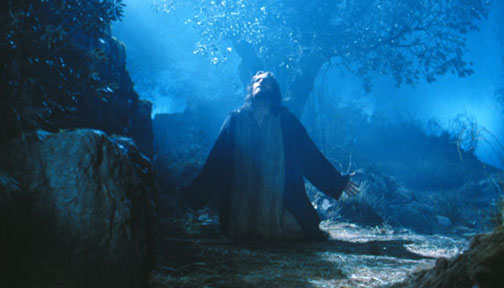
But whatever Christ endured physically, the spiritual suffering He went through was much worse. The film opens with Christ in emotional torment. He came to the Garden of Gethsemane for solace but was literally sweating blood. He knew what was coming and He didn't want it. He prayed to the Father for a way out. This is the moment that I relate to Christ the best. I have prayed this prayer many times, wanting some other way out of my circumstances. For Jesus there was no other way. It wasn't the physical suffering that bothered Him, it was the fact that He, the only man in history without sin, would take on all of our failings, past, present and future. This would wreck the closest relationship He had - that with His Father.


"I want to show the humanity of Christ as well as the divine aspect," Mel Gibson said about this film. "It's a rendering that for me is very realistic and as close as possible to what I perceive the truth to be."

It's amazing that such a flawed man as Gibson, portrayed the most accurate, emotionally gripping account of Christ's death, that the world has ever seen (a point debated by the critics). It's interesting that Gibson had his own hand filmed, as the one pounding the nails through Christ's palm, on the cross.

When Mel Gibson asked Jim Caviezel to play the part of Jesus Christ in this film Caviezel told him, "It is eerie, my initials are J.C. and I'm 33 years old."

Once Caviezel accepted, Gibson did everything in his power to dissuade him from taking on this role. He even told him, he might never work as an actor again.

Caviezel responded, "Mel, this is what I believe. We all have a cross to carry. I have to carry my own cross. If we don't carry our crosses, we are going to be crushed under the weight of it. So let's go and do it."

Caviezel explained that during filming his make-up time started at 2 am and went until 10 am. He struggled with a separated shoulder, he was hit by lightening (and survived) as well, during the days he hung on the cross he developed hypothermia.


"It was so cold it was like knives coming through me," Caviezel explained. "On one day of hypothermia I was so cold I could barely get the lines out. My mouth was shaking uncontrollably. My arms and legs went numb. I was suffocating on that cross. In the mean time, you watch people have coffee and laugh. They were very indifferent about what I was going through...there are things that I went through that I can't even talk about. I felt like a great presence came within me at times when we were filming. This prayer that came from me was, 'I don't want people to see me. I just want them to see Jesus."

On the set, one of the Muslim actors portraying a guard who beat Christ became a believer, Caviezel said. Apparently many people had this same experience watching the film in theatres, churches or at home.


The moment that made the most impact on me was a very high camera shot from above Christ as He hung on the cross. The first time I saw this shot and watched the image blur, I didn't understand what was happening. Then "I" became a tear that shot down out of the highest heavens and landed at the foot of the cross causing an earthquake. Immediately I knew it was God crying over the suffering of His Son. I was moved to tears.


As believers, we often wear the cross as a symbol around our necks, tattooed on our body or hung in our car. We sing about it without understanding what it means. We are so far removed from the actual time period this happened, we have no idea of the true ordeal Christ went through.

In this film, as I watched Mary wipe her son's blood from the spattered courtyard, and saw red rivets of blood spurt out of His palms as the nails were hammered in, I realized that every drop of His blood had and continues to have a purpose. It gives us an opportunity to have an intimate relationship with God. It's an opportunity I had accepted decades ago, but I never comprehended the cost.

"There's no question that I believe," Caviezel said. "What I wanted more than anything, was that people would have a visceral effect to finally make a decision whether to follow Him or not."


This film did that. It changed my view of Christ's sacrifice and changed me, forever...


Friday, April 15, 2011

The Proposal

It was April 15, 1990. Easter Sunday! I had brought my boyfriend, Peter Fleck, home to Abbotsford to visit my family. He had made a good impression on my Mom and Dad many months ago.

But Peter had only met my father once before my Dad died. Though I was delighted Peter and my father hit it off, I was sad that they never really got to know each other. I was my daddy's girl and I had looked forward to having him walk me down the aisle. But at my father's funeral, in November 1989, my great uncle Abe told me he would be happy to fill that role. He was the dearly loved patriarch of our family and I adored him. He knew I was in love and expected Peter to propose.

In fact, everyone was expecting Peter to propose. I'd been expecting him to 'pop the question' for quite some time and, at 29, I wasn't getting any younger. Peter and I started 'dating' in September, 1989, but we never went on normal 'dates.' We didn't go to movies or out for dinner (although Peter 'ate out' every night at my basement suite). We didn't even spend much time with others   we were so besotted with each other, we just wanted to be together. Within a few weeks of 'going out,' (or staying in), we knew that our budding relationship was serious. It wasn't just about fun and friendship, it was speeding towards marriage.

Considering how fast things started, I thought Peter might propose on my birthday in January or on Valentine's Day or maybe sometime...ANYTIME in March. But here we were in the middle of April and I had nothing. I knew Peter was careful and liked to move slowly, but this bordered on ridiculous. I began to despair of a proposal ever coming.

I had even gone to great lengths to set up the perfect opportunity for Peter. The day before, we had driven into Vancouver and wandered around Stanley Park. It was one of my favorite haunts from my university days. With the sun beating down on us and flowers sprouting in full bloom, spring was in the air. There were even different species of birds going through their mating rituals all around us and I figured Peter might get the hint...

But as we stood for the final hymn at the Easter Sunday service the next day, I had given up. Peter seemed distracted and tired. All I wanted to do was help my mother with lunch and spend some time outside soaking up the sun.

After lunch, I changed into shorts and lay down on a deck chair. Peter came into the backyard quite excited. He said he had hidden some Easter baskets in the house for me and my mom, and wondered if we could search for them...now.

I opened one eye and glared at him. "Maybe later," I muttered.

Peter looked crestfallen. He stumbled around with his words, saying it would be great if I we could hunt for them now, then I could suntan all I wanted later. I sighed and went inside to find my mom and tell her we needed to go on an Easter basket hunt. She seemed delighted, so I headed downstairs to start in the basement and work my way up.

It didn't take me long to find the basket. Peter had included a number of interesting items from 10,000 Villages, one of our favorite stores. As I dug through the basket I found a tiny envelope bearing my name and a RED bow. Peter had already heard my whole philosophy on RED ─ how that word had much meaning for me. Inside was an even smaller card with a beaver on it. Peter was a proud Canadian!

In the envelope was a lengthy hand-written note with two well-worn gold rings. I later learned these were the wedding bands his grandparents wore. I should have taken the hint right away, but after having waited for so long, I needed to see what he had said...


"These two rings are family heirlooms - fashioned and created out of love.
     Behind the glittering gold exteriors,
     Are many tales of trial and triumph.
Their circular form speaks a great mystery, complete ─ yet with no apparent beginning or end.
     Such is the nature of God Himself,
     Eternally existent in future and past.
Difficult to comprehend? But no less real than the rings themselves.
     Is love any easier to understand?
     Tangible, yet so very intangible.
So it also is ─ with a woman named Doris and a man named Peter.
     Lives once seemingly distinct and separate,
     Have become inextricably intertwined.
Therefore the time has come to formally band together what has already begun.
     Like our historic circles of Gold,
     They must be moulded together as one.
A gleaming diamond is then placed on top, polished with expectation, hope and purpose.
     Let us venture into the future.
     Two intertwining circles of love.
Forever...
More..."

Okay, so do you see the phrase, "Will you marry me?" anywhere in there? Neither did I! Peter was always unconventional. While I was reading his proposal over, I could hear my Mom calling from the upstairs, "I found mine!" I was totally oblivious to her and looked up at Peter who had so much expectation in his face, eagerly awaiting my response.

I read through the proposal again, fingering the rings. Finally I reached up and hugged him.

"Well?" he enthusiastically asked.
"Yes!" I replied.

By then my mother found us downstairs and when she saw the rings and our expressions, she burst into tears. Then appropriately exclaimed, "I've been saving up for the wedding since November!"

I later learned that Peter had stayed up most of the night preparing our beautiful Easter baskets and writing out the proposal. He is a gifted writer after all...I was the one who should have expected this. Before Peter left with me on this trip, he told his parents he was planning to propose and they gave him their hearty approval. Even they had been waiting for him to 'get on with it.'

I've asked Peter what would have happened if my Mom had found my basket and opened The Proposal by mistake. He said that he'd be a widower now, and it certainly would have sent shock waves through my family at the time :)

Though I still tease Peter, that he never really asked me to marry him, it was a proposal I will never forget. I never got my sun-tanning in though. Mom made me change back into my Sunday best and took photos of me and my fiancé (I finally was able to use THAT word), under her flowering cherry tree.

This was just the beginning...

Monday, April 11, 2011

Sense or Censorship - Today's Banned Books.


Some books change your life forever. To Kill a Mockingbird transformed mine. It woke me up to the issue of racial inequality, something that hadn't been a part of my world until then.


I felt an instant kinship with the two children at the heart of the novel, six-year-old Scout and her older brother Jem. Set in the state of Alabama during the 1930s, their innocence is slowly dismantled as their father, Atticus Finch, takes on the legal challenge of defending an African American against a charge of rape. Such a case had never been won at that time. 


The accused, Tom Robinson, is innocent as much in character as in the crime and both children become outraged when the overwhelming evidence proving his innocence is ignored.


This Pulitzer Prize winning novel by Harper Lee was required reading for my Grade 10 English class. Our teacher paired it with a showing of the Oscar-winning film. Gregory Peck embodied the heart and soul of Atticus Finch and Mary Badham portrayed the curiosity and attitude of six-year-old Scout exactly as I had imagined it.


Written with warmth and humor, To Kill a Mockingbird emphasizes courage, tolerance and decries prejudice. So it was with surprise that I found out this novel had a long history of being banned in many schools across North America.


In 2002, Brian Bauld wrote, "I have been teaching English to Nova Scotian students from Grade 7 to Grade 12 for 28 years. Without doubt, the book that has gained the most favour with my students has been To Kill a Mockingbird. From the thousands of students who have had the privilege to read Harper Lee's one-book-wonder, I would be hard pressed to think of any but the most obtuse and inane who could interpret it as racist."


For myself and many others, the words obtuse and inane best describe those that have implemented the ban of this book.


In 2001, the City Library of Chicago began a program designed to encourage literacy. Endorsed by mayor Richard Daley and city officials, the One Book, One Chicago initiative picked To Kill a Mockingbird as its first book for the entire city to read. By the way, Chicago has a robust black population. How anyone could think that this book hurts African Americans is beyond comprehension.

"That this book is still being taught, despite ongoing resistance, is a credit to those principals and teachers who have placed quality above quackery," Bauld aptly states. "My experience is that students are drawn naturally to stories of justice, mercy, fairness, selflessness and honour, especially when handled by great artists."


There have been numerous "classics" banned through the ages; Lord of the Flies, Catcher in the Rye, Brave New World, 1984, Ulysses and ironically Fahrenheit 451, a novel that reveals a future culture where books are banned and burned.


Even the Bible has been banned.


But I was surprised to learn that Mark Twain's great American novel, Adventures of Huckleberry Finn, has not just been banned but is actually undergoing editing changes. NewSouth Books plans to release a version of this classic with the "n" word (nigger) taken out (used 219 times) and replaced with "slave." They will also remove the word "injun," a colloquial reference to Native Americans.


It's important to remember that in using these words, Twain, like Harper Lee, was critiquing racism not endorsing it.

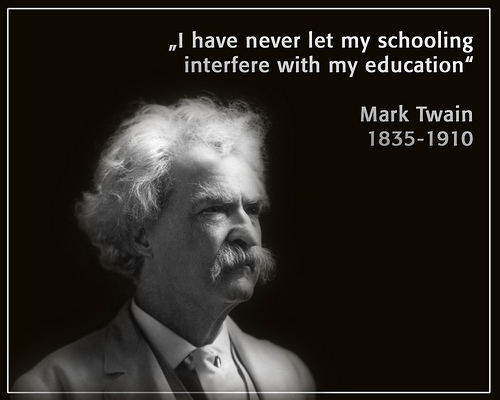
One can only imagine what Twain himself would say about this edit of Huck Finn. Known for his acerbic wit and speaking his mind, one of Twain's famous quotes, "I have never let my schooling interfere with my education," could well be used in this instance.


A few years ago, I was writing a feature article on modern cowboys for a national magazine. I added some historical context to the piece and wrote about my favorite childhood game, "Cowboys and Indians." The editor said this phrase was not politically correct and could hurt a whole people group. It would have to be changed to read "Cowboys and First Nations people." Well, I had NEVER played cowboys and First Nations people, and when I pointed out it was not meant to be derogatory but merely historically representative, she refused to budge. That section was edited out.


Peter Messent, author of The Cambridge Introduction to Mark Twain is very critical of editing this American classic. He writes, "As Twain himself said, 'The difference between the almost right word and the right word is really a large matter - it's the difference between the lightning bug and the lightning.' 


"I respect the motivation of Alan Gribben, the senior Twain scholar who is responsible for the new edition, and who wishes to bring the book back into easy classroom use, believing 'that a significant number of school teachers, college instructors and general readers will welcome the option of an edition of Twain's...novels that spares the reader from a racial slur that never seems to lose its vitriol.'


"But it's exactly that vitriol and its unacceptable nature that Twain intended to capture in the book as it stands. Perhaps this is not a book for younger readers. Perhaps it is a book that needs careful handling by teachers at high school and even university level as they put it in its larger discursive context, explain how the irony works, and the enormous harm that racist language can do. But to tamper with the author's words because of the sensibilities of present-day readers is unacceptable. The minute you do this, the minute this stops being the book that Twain wrote."

Do you feel books like To Kill a Mockingbird and The Adventures of Huckleberry Finn should be banned or edited to remove inflammatory words - like nigger?

Have we become so overly sensitive to some terms that we cannot judge their context in classic literature?


Any English instructors out there? Do you take these edits as a slight to your teaching capabilities - that you may not be able to present the discursive context in a way your students would comprehend? Would you rather teach an edited version of these novels?